
In The New York Times, Charles Duhigg (author of The Power of Habit) writes, “At the core of every habit is a neurological loop with three parts: A cue, a routine and a reward.” To build healthy habits, then, he proposes that we behave in a slightly counter-intuitive way.
The first two steps are fairly straight forward: we pick a habit we’d like to develop and then a cue that’ll trigger the “routine” we hope to establish. If you want to work out five times a week, for instance, you might make the cue super simple: when you’re done with work, you go to the studio (or gym or running trail or wherever else you get your move on). You would try to make the cue and the routine automatic. “Do not pass go, do not collect $200, do not drive straight home after work.” Instead, you might think, “Done with work, now I go to the studio.” Simple. You’re removing the moment of choice–“Done with work! Should I go to a class or stop by the grocery store on the way home? Maybe I’ll pick up takeout….” Nope, choice comes after the routine: Work. Work out. Then what?
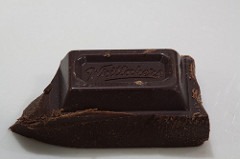
But to keep building that routine, Duhigg says we can’t underestimate the power of a reward. It may take a while for a more lofty “reward” to feel, well, rewarding. You may know that you will feel more emotionally stable if you work out regularly, sweating, moving, and enjoying the automatic deep-breathing that a good workout spurs. Or you may know that, in six months or so, you’ll start seeing the difference of a healthy workout habit in your bloodwork or in your waist size. But that’s long-term, and it’s not enough to build a routine. Instead, Duhigg suggests something immediate, easy, and fully pleasurable: a square of decadent, indulgent, totally beautiful dark chocolate. You work out, you get the chocolate.
Now, your budding routine looks like this: Work. Work out. Chocolate!
And the next day? Work. Work out. Chocolate!
We suggest following a three-week period to establish your new habit before you start changing the reward (maybe you inch toward something less immediate for a while), and soon enough, you’ll find that reward or no reward, the routine has been established.